
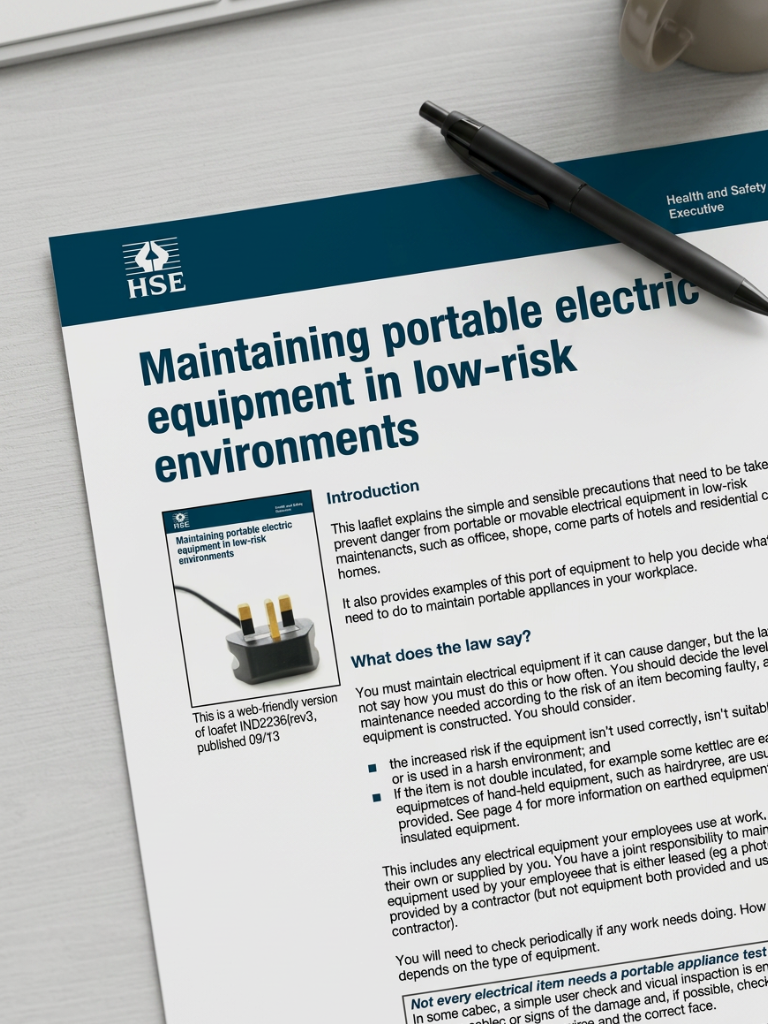
Introduction
Portable Appliance Testing (PAT), now also referred to as Electrical Equipment Testing (EET), encompasses a wider range of electrical equipment
1. How often should PAT testing be carried out?
The frequency of PAT testing depends on the type of equipment and the environment in which it is used. Some appliances in high-risk areas may need testing more frequently, while low-risk office equipment may be tested less often.
For detailed guidance, you can refer to the Health and Safety Executive (HSE) page on PAT testing: HSE PAT Testing Guidance..
2. Is PAT testing a legal requirement?
Yes. Under UK health and safety law, businesses and landlords are responsible for ensuring that electrical appliances are safe to use. While the law doesn’t specifically mandate “PAT testing,” regular inspection and testing is the recommended method to comply with electrical safety regulations.
3. Will PAT testing disrupt my business?
No. PAT testing is designed to be quick and efficient. Our engineers carry out inspections and testing with minimal disruption to your day-to-day operations, labelling each appliance as pass or fail and providing a full compliance report.
Need professional PAT testing for your business or rental property?
Our qualified engineers provide fast, fully compliant PAT testing across the UK. Request a Quote Today