
- Local Service
- Certified Engineers
- Landlord & Buisness Approved
- Fast Response
- Flexible Scheduling
PAT Testing for Landlords
Professional PAT testing for landlords, rental properties and HMOs. BlocTest inspects and tests electrical appliances provided for tenants, with clear digital records, appliance labelling and straightforward reporting.
- Fast Response
- Flexible Appointments
- Digital Reporting
- Asset Register
Professional PAT Testing for Landlords
Landlords have a responsibility to ensure that electrical equipment they provide for tenants is safe to use. PAT testing, also known as electrical equipment testing, can form part of an appropriate inspection and maintenance programme for appliances such as kettles, microwaves, lamps and other portable electrical equipment.
At BlocTest, we provide practical PAT testing for landlords and property owners, with visual inspection, appropriate electrical testing, appliance labelling and clear digital records.
- Identify visible maintenance issues early
- Check the general condition of the property
- Identify damage or deterioration
- Highlight potential safety concerns
- Identify concerning tenant behaviour
Who Needs PAT Testing?
PAT testing can be relevant to landlords who provide electrical appliances as part of a rental property or tenancy. This can include furnished and partially furnished rental properties, HMOs and other accommodation where portable electrical equipment is supplied for tenants to use.
The equipment provided will depend on the property and tenancy. Common examples include kettles, microwaves, lamps, extension leads and other portable electrical appliances.
- Private Rental Properties
- HMO's
- Furnished Accommodation
- Part-Furnished Properties
- Property Portfolios
- Appliances Provided to Tenants
What's Included in Our Landlord PAT Testing Service?
Visual Inspection
Equipment, plugs, leads and other accessible components are checked for visible signs of damage or deterioration.
Electrical Testing
Appropriate electrical tests are carried out where required, based on the equipment and circumstances.
Pass/Fail Labelling
Tested appliances are clearly labelled to identify their test status.
Digital Test Records
Clear digital records provide a useful record of the equipment tested and the results.
Asset Register
Test records can also provide an asset register, helping landlords keep track of appliances across their properties.
Annual Reminder
We will schedule your next inspection on the day, or send you a reminder in plenty of time when it’s due
Do Landlords Need PAT Testing?
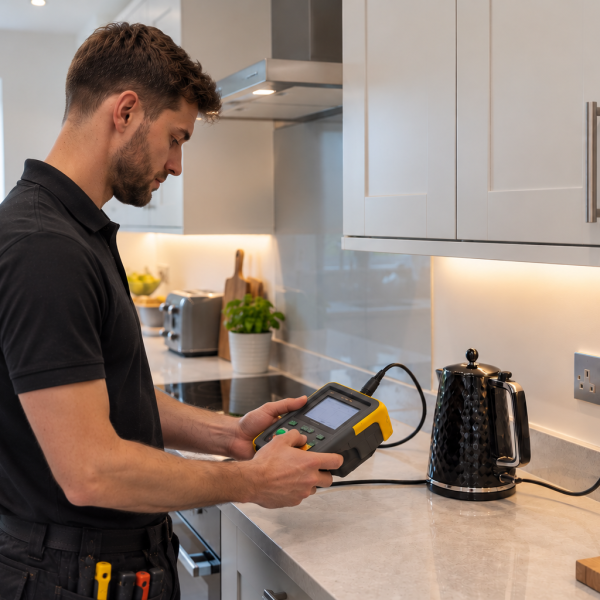
A Practical Approach
There is no general requirement for every private landlord in England to carry out PAT testing on a fixed annual schedule. However, landlords are responsible for ensuring that electrical appliances they provide are safe to use, and appropriate inspection and testing can form part of an effective electrical safety programme.
Private landlords in England have specific legal duties relating to the safety of electrical installations, including inspection and testing by a qualified person at least every five years. These requirements relate to the fixed electrical installation rather than automatically requiring annual PAT testing of every portable appliance. GOV.UK
Where electrical equipment is provided as part of a tenancy, landlords should ensure that it remains safe to use. PAT testing, or electrical equipment testing, can provide a documented way of assessing the condition of relevant appliances.
Why Choose BlocTest for Landlord PAT Testing?
BlocTest provides landlord PAT testing across Burnley and East Lancashire, with wider coverage available for larger property portfolios and testing programmes.
- Experienced inspectors
- Fast response
- Flexible scheduling
- Local presence
- Friendly professional service
Our Most Frequently Asked Questions
Is PAT testing a legal requirement for landlords?
For private landlords in England, there is no general legal requirement to carry out PAT testing at a fixed interval. However, landlords must ensure that electrical equipment they provide is safe to use. PAT testing can form part of an appropriate inspection and maintenance programme. Social landlords have specific legal requirements for checking electrical equipment they provide to tenants.
How often should a landlord property inspection be carried out?
There is no single PAT testing interval that applies to every rental property or appliance. The appropriate frequency depends on factors such as the equipment, how it is used, the environment and the level of risk. A risk-based approach should be used to determine suitable inspection and testing intervals.
What appliances should landlords have tested?
Landlords should ensure that electrical equipment they provide as part of a tenancy is safe to use. This may include appliances such as kettles, microwaves, lamps, extension leads and other portable electrical equipment. The equipment provided will depend on the property and tenancy. GOV.UK
Do landlords need PAT Testing as well as an EICR report?
Yes. An EICR relates to the fixed electrical installation, including wiring, sockets, light fittings and the consumer unit. PAT testing concerns portable electrical equipment. Neither inspection replaces the other.
What happens if a landlord's appliance fails PAT testing?
If an appliance is found to be unsafe, it should be taken out of use until the fault has been assessed. Depending on the problem, it may be suitable for repair or may need to be replaced. The result should be recorded so the landlord has a clear record of the action taken.
Need to arrange a test today?
Practical compliance support with flexible appointments and minimal disruption.